Estrogen is most commonly associated with female reproductive health, but this hormone plays a vital role in men as well. It affects the brain, bones, skin, blood vessels, metabolism, mood, and the reproductive system. When estrogen levels are too high or too low, numerous symptoms and health issues can arise.
Although estrogen levels naturally fluctuate throughout life, long-term hormonal imbalance can significantly impact quality of life and is often linked to other medical conditions.
What is Estrogen?
Estrogen is a group of hormones primarily produced by the ovaries in women, and in smaller amounts by the adrenal glands and fat tissue. In men, estrogen is mainly created by converting testosterone into estrogen using the aromatase enzyme.
The most important forms of estrogen are:
- Estradiol (E2) — The most potent estrogen. It is responsible for most estrogenic effects in the body (breast development, the menstrual cycle, bone density, libido, etc.). Its levels are highest in women of childbearing age.
- Estrone (E1) — Becomes the primary circulating estrogen after menopause. It is produced mainly in fat tissue from androgens (androstenedione). Because of this, overweight or obese postmenopausal women often have higher estrone levels.
- Estriol (E3) — The weakest estrogen. Its levels rise dramatically during pregnancy (especially in the third trimester) and it is considered protective for both mother and fetus. Outside of pregnancy, it is present in very small amounts.
The Role of Estrogen in the Body
Estrogen is involved in many essential processes:
- Regulates the menstrual cycle
- Impacts fertility
- Maintains bone density
- Supports skin and hair health
- Influences mood and sleep
- Helps regulate body temperature
- Affects metabolism and body fat distribution
- Supports heart and blood vessel health
- Plays a role in brain function and concentration
In men, estrogen contributes to:
- Bone health
- Brain function
- Libido
- Sperm production
Low Estrogen in Women
Estrogen levels naturally decline during perimenopause and menopause, but low estrogen can also affect younger women.
Possible Causes:
- Perimenopause and menopause
- Chronic or excessive stress
- Restrictive diets and rapid weight loss
- Over-exercising
- Ovarian disorders
- Hashimoto’s thyroiditis and other hormonal disorders
- Chronic illnesses
- Long-term malnutrition
- Pituitary gland disorders
Symptoms of Low Estrogen:
- Irregular or missed periods
- Hot flashes and night sweats
- Skin and vaginal dryness
- Decreased libido
- Insomnia
- Mood swings
- Anxiety and depression
- Fatigue
- Difficulty concentrating and memory issues
- Joint pain
- Hair loss
- Accelerated skin aging
- Decreased bone density
In some women, low estrogen can be linked to osteopenia and osteoporosis, insulin resistance, thyroid issues, autoimmune diseases, and chronic fatigue.
High Estrogen in Women
High estrogen doesn’t always mean the body is producing too much of the hormone. Sometimes, the issue lies in the ratio between estrogen and progesterone—a state often referred to as “estrogen dominance.”
Possible Causes:
- Obesity
- Insulin resistance
- Polycystic Ovary Syndrome (PCOS)
- Chronic stress
- Liver diseases
- Exposure to xenoestrogens (found in plastics and cosmetics)
- Hormone replacement therapy
- Certain medications
- Poor elimination of hormones from the body
Symptoms of High Estrogen:
- Heavy and painful periods
- Severe PMS
- Bloating and water retention
- Breast tenderness
- Mood swings
- Migraines
- Weight gain
- Fatigue
- Decreased libido
- Insomnia
- Cysts and fibroids
- Frequent or worsening headaches
Chronically elevated estrogen can be associated with endometriosis, fibroids, PCOS, insulin resistance, liver problems, and an increased risk for certain hormone-dependent tumors.
Low Estrogen in Men
Men can also experience health issues due to low estrogen, especially if their testosterone levels are low or if there is a broader hormonal imbalance.
Symptoms:
- Decreased libido
- Erectile dysfunction
- Fatigue
- Loss of muscle mass
- Bone and joint pain
- Depressive mood
- Reduced bone density
High Estrogen in Men
Elevated estrogen in men is more common than many think.
Possible Causes:
- Obesity
- Liver diseases
- Alcohol consumption
- Low testosterone
- Certain medications
- Exposure to endocrine disruptors
Symptoms:
- Breast tissue enlargement (gynecomastia)
- Decreased libido
- Erectile dysfunction
- Fatigue
- Mood swings
- Increased body fat
- Decreased muscle mass
The Connection Between Estrogen and Other Conditions
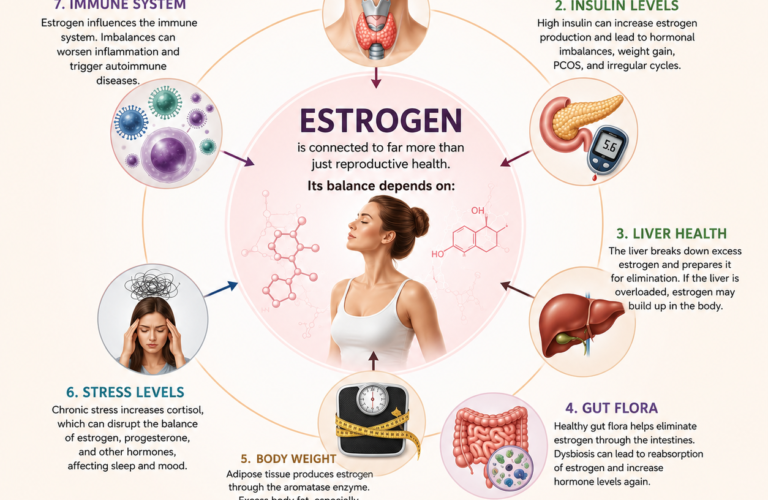
Hormonal imbalances rarely occur in a vacuum. All systems in the body are deeply interconnected—the endocrine system, immune system, liver, gut, metabolism, and nervous system constantly influence one another. Because of this, disrupted estrogen levels often go hand-in-hand with other health problems.
In many cases, the issue is not just the amount of estrogen produced, but how the hormone is metabolized, broken down, and eliminated from the body.
1. Estrogen and Thyroid Problems
There is a powerful link between estrogen and thyroid function, particularly in women with:
- Hashimoto’s thyroiditis
- Hypothyroidism
- Graves’ disease
- Hormonal fluctuations during perimenopause
How does estrogen affect the thyroid?
Elevated estrogen can increase levels of a protein called TBG (thyroid-binding globulin). This protein “binds” thyroid hormones in the blood, leaving less free T3 and T4 available for cells to use. Consequently, a person might show normal overall hormone levels in lab results, yet still experience symptoms of an underactive thyroid.
Overlapping Symptoms:
Many symptoms of high estrogen and hypothyroidism are virtually identical:
- Fatigue
- Water retention and weight gain
- Depressive mood
- Hair loss
- Cold hands and feet
- Constipation
- Poor concentration
In Hashimoto’s, hormonal shifts can further aggravate inflammation, fatigue, mood swings, PMS, and menstrual issues.
The Liver’s Role in T4 to T3 Conversion:
The liver plays a dual role: it breaks down estrogen and converts T4 hormone into its active T3 form. If liver function is compromised due to a fatty liver, inflammation, or chronic stress, it can lead to both poor estrogen clearance and inadequate thyroid hormone activation.
2. Estrogen and Insulin Resistance
Insulin and sex hormones are closely linked. When cells become less sensitive to insulin, the pancreas produces more of it to maintain normal blood sugar levels. Chronically high insulin levels can directly impact ovarian function and overall hormonal harmony.
How does insulin affect estrogen?
Elevated insulin can stimulate estrogen production, increase inflammation, contribute to fat accumulation, and reduce cellular sensitivity to other hormones. In women, this often manifests as:
- Estrogen dominance
- Irregular cycles and PCOS
- Severe PMS
- Difficulty losing weight
Why does weight gain happen?
High estrogen and high insulin combine to increase appetite, trigger sugar cravings, slow down fat burning, and increase water retention. This creates a vicious cycle: insulin rises –> body fat increases –> fat tissue produces more estrogen –> estrogen further disrupts metabolic balance.
3. Estrogen and Liver Disease
The liver is the primary organ responsible for hormone metabolism. Once estrogen has fulfilled its function, the liver breaks it down and prepares it to be excreted via bile and the stool. If the liver is sluggish, estrogen can recirculate and build up in the body.
Factors that burden the liver include: fatty liver, alcohol, chronic inflammation, hepatitis, heavily processed foods, excess sugar, certain medications, and environmental toxins.
Symptoms of poor estrogen clearance: bloating, severe PMS, headaches, breast tenderness, fluid retention, post-meal fatigue, hormonal acne, and irregular periods.
The Importance of Gut Health:
A well-functioning liver isn’t enough; estrogen must also leave the body through the digestive tract. If a person suffers from dysbiosis, Candida overgrowth, SIBO, chronic constipation, or a disrupted gut microbiome, estrogen can be reabsorbed from the gut back into the bloodstream.
4. Estrogen and Obesity
Fat tissue is not just stored energy; it is an active endocrine organ. Fat cells contain the aromatase enzyme, which converts testosterone into estrogen. The more visceral fat a person carries (especially around the abdomen), the higher their estrogen production, hormonal imbalance, and systemic inflammation will be.
- In women: Excess estrogen is linked to heavy periods, fibroids, endometriosis, fluid retention, and weight loss plateaus.
- In men: Increased aromatase activity leads to a drop in testosterone, gynecomastia, loss of muscle mass, fatigue, and lower libido.
5. Estrogen and Chronic Stress
Stress impacts both your psychology and your physiology. Under chronic stress, the adrenal glands pump out more cortisol. Prolonged high cortisol levels disrupt progesterone, estrogen, insulin, and thyroid hormones.
How stress affects the cycle:
Chronic stress can suppress ovulation, cause irregular periods, worsen PMS and insomnia, and drive up inflammation. In many women, stress leads to a relative progesterone deficiency, making estrogen dominant.
Signs of stress-induced hormonal issues: insomnia, anxiety, waking up tired, middle-of-the-night waking, intense sugar cravings, skipped periods, and worsening premenstrual symptoms.
6. Estrogen and Autoimmune Diseases
Women face a significantly higher risk of developing autoimmune diseases than men, and sex hormones are believed to play a major role in regulating the immune system. Estrogen can stimulate certain immune responses, modulate the intensity of inflammation, and alter immune cell activity.
Autoimmune conditions frequently linked to hormonal shifts include Hashimoto’s thyroiditis, Graves’ disease, lupus, rheumatoid arthritis, and multiple sclerosis. Many women notice their autoimmune symptoms flare up right before their period, during perimenopause, postpartum, or during periods of intense stress.
How Are Estrogen Levels Determined?
A doctor may recommend blood tests to evaluate your hormone levels. The most frequently checked markers include:
- Estradiol (E2) and Progesterone
- FSH and LH
- Testosterone and Prolactin
- SHBG (Sex Hormone-Binding Globulin)
- Thyroid hormones
- Insulin and glucose fasting levels
For women, the timing of the blood test within the menstrual cycle is crucial, as estrogen levels naturally fluctuate. Depending on the symptoms, a physician might also request a pelvic ultrasound, a mammogram or breast ultrasound, a bone density scan (DEXA), or further endocrinological evaluations.
When to See a Doctor
You should consult a physician or endocrinologist if you experience:
- Persistent changes in your menstrual cycle or missed periods
- Unusually heavy menstrual bleeding
- Hot flashes and ongoing insomnia
- Unexplained, chronic fatigue or sudden weight shifts
- Fertility struggles
- Breast pain or new lumps
- Gynecomastia (breast enlargement) in men
- Long-standing mood changes or symptoms of hormonal imbalance that last for months
Nutrition and Lifestyle Changes for Hormonal Balance
While diet alone cannot always fix a medical hormonal disorder, it provides vital foundational support for the body.
Dietary Recommendations:
- Increase your intake of: Fiber-rich vegetables, cruciferous vegetables (broccoli, cauliflower, cabbage, kale), high-quality proteins, omega-3 fatty acids, flax and pumpkin seeds, and plenty of clean water.
- Limit or avoid: Ultra-processed foods, excess sugar, alcohol, trans fats, and fast food.
Support Your Liver and Gut
Because the liver and digestive tract are responsible for clearing out excess hormones, managing issues like dysbiosis, constipation, or fatty liver is essential for keeping estrogen in check.
Prioritize Sleep and Stress Management
Chronic stress and poor sleep wreck cortisol and insulin levels, which directly harms your sex hormones. Consistent sleep schedules, gentle physical activity, and daily relaxation techniques can have a profound balancing effect.
Conclusion
Estrogen is far more than just a reproductive hormone; it is vital for the entire body—in both women and men. Whether it is too low or too high, an estrogen imbalance can affect your energy, mood, sleep, weight, bones, and metabolism.
If you have been experiencing persistent symptoms, getting the right lab tests and seeking advice from a medical professional or endocrinologist is the best next step. Catching a hormonal imbalance early can prevent more serious health complications and significantly improve your daily quality of life.